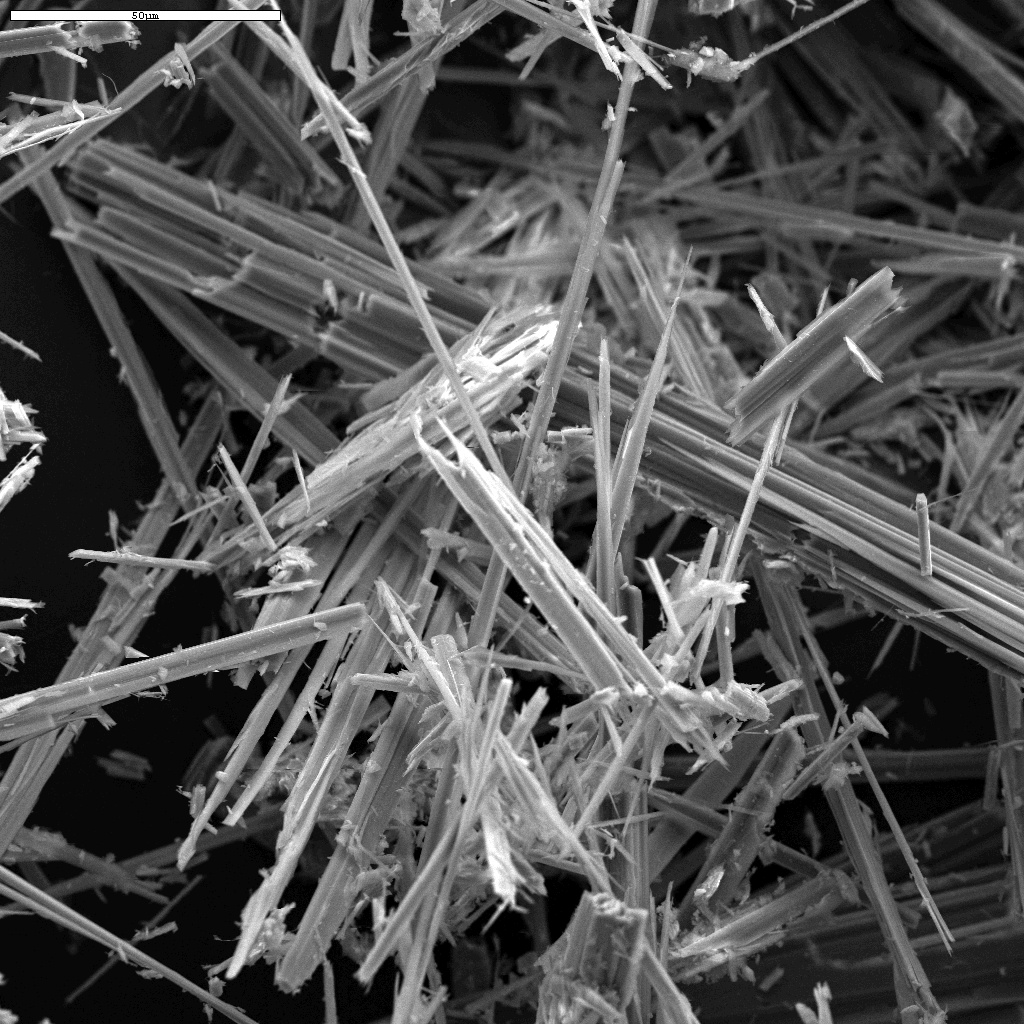
Asbestos has been known since antiquity. The Greeks and Romans marveled at a mineral fiber that could be woven into cloth and cleaned by throwing it into fire. In the late nineteenth century, industrial mining of asbestos deposits in Canada, South Africa, and Russia converted this curiosity into a commodity. By 1900, asbestos was being incorporated into fireproof insulation, pipe lagging, ceiling tiles, floor tiles, brake linings, ship construction, and building materials across North America and Europe. By the 1920s, it was in the walls and ceilings of schools, hospitals, and office buildings. The material was celebrated for exactly the properties it genuinely had: it did not burn, it did not conduct heat, it did not corrode. It was, in the language of the industry that sold it, a miracle mineral.
The health problems appeared early. Factory physicians in England and Canada reported unusual lung disease among asbestos workers as early as the 1890s. In 1930, the Metropolitan Life Insurance Company conducted a study of workers at an asbestos textile plant in New Jersey and found severe pulmonary fibrosis in a significant proportion of long-term employees. The condition was named asbestosis. The British Factory Inspectorate conducted its own survey the same year, also finding widespread disease, and the British government required improved ventilation and dust control in asbestos factories.
The companies knew. Internal correspondence and memoranda from major asbestos producers, most prominently Johns-Manville Corporation, document that company executives received medical reports detailing the risks and made deliberate decisions to suppress or minimize them. Legal department guidance from the 1930s instructed scientists to soften findings before publication. Insurance claims from asbestos workers were quietly settled and made subject to confidentiality agreements. Company physicians who examined workers and found disease were instructed not to inform patients of their diagnoses, on the stated grounds that knowing might discourage continued employment.
The cancer connection took longer to establish formally. Richard Doll published a study in 1955 in the British Journal of Industrial Medicine documenting elevated lung cancer mortality among asbestos textile workers at the Rochdale plant. Irving Selikoff, working at the Mount Sinai School of Medicine in New York, published findings in the Journal of the American Medical Association in 1964 showing dramatically elevated rates of lung cancer and mesothelioma among asbestos insulation workers in the United States. Mesothelioma, a rare cancer of the pleural lining of the lung, virtually never seen in the general population, was by the mid-1960s understood to be an almost pathognomonic indicator of asbestos exposure.
The regulatory response in the United States was slow by the standard of what the science had already shown. The Environmental Protection Agency, established in 1970, moved in 1971 to declare asbestos a hazardous air pollutant. The Occupational Safety and Health Administration, also new, issued emergency standards limiting airborne asbestos fiber concentrations in workplaces. These regulations came roughly forty years after industry insiders had documented the health consequences in internal memoranda, and more than a decade after Selikoff's published cancer data.
The particular irony of the timing was physical. American schools built during the postwar construction boom of the 1950s and 1960s were full of asbestos, in ceiling tiles, floor tiles, pipe insulation, spray-applied fireproofing on structural steel. In 1971, when the EPA first began to restrict asbestos, students in those buildings sat in asbestos-contaminated rooms and were, in some cases, taught that the material around them was a safe and effective insulating material with no proven health risks in ordinary use. The legal battles that followed generated massive document discovery, and the internal records that emerged showed an industry that had understood what asbestos did to lungs before most of the buildings containing it had been built.