Bats are blind and rely entirely on echolocation.
Most bats can see reasonably well and use vision alongside echolocation. The phrase 'blind as a bat' is entirely false.
What changed?
The phrase "blind as a bat" has circulated for centuries. The idiom took root because bats are nocturnal, erratic fliers that appear to navigate by some invisible sense, and the inference that their eyes must be useless followed naturally from that observation. Every bat species on Earth, all 1,400-plus of them, has functional eyes.
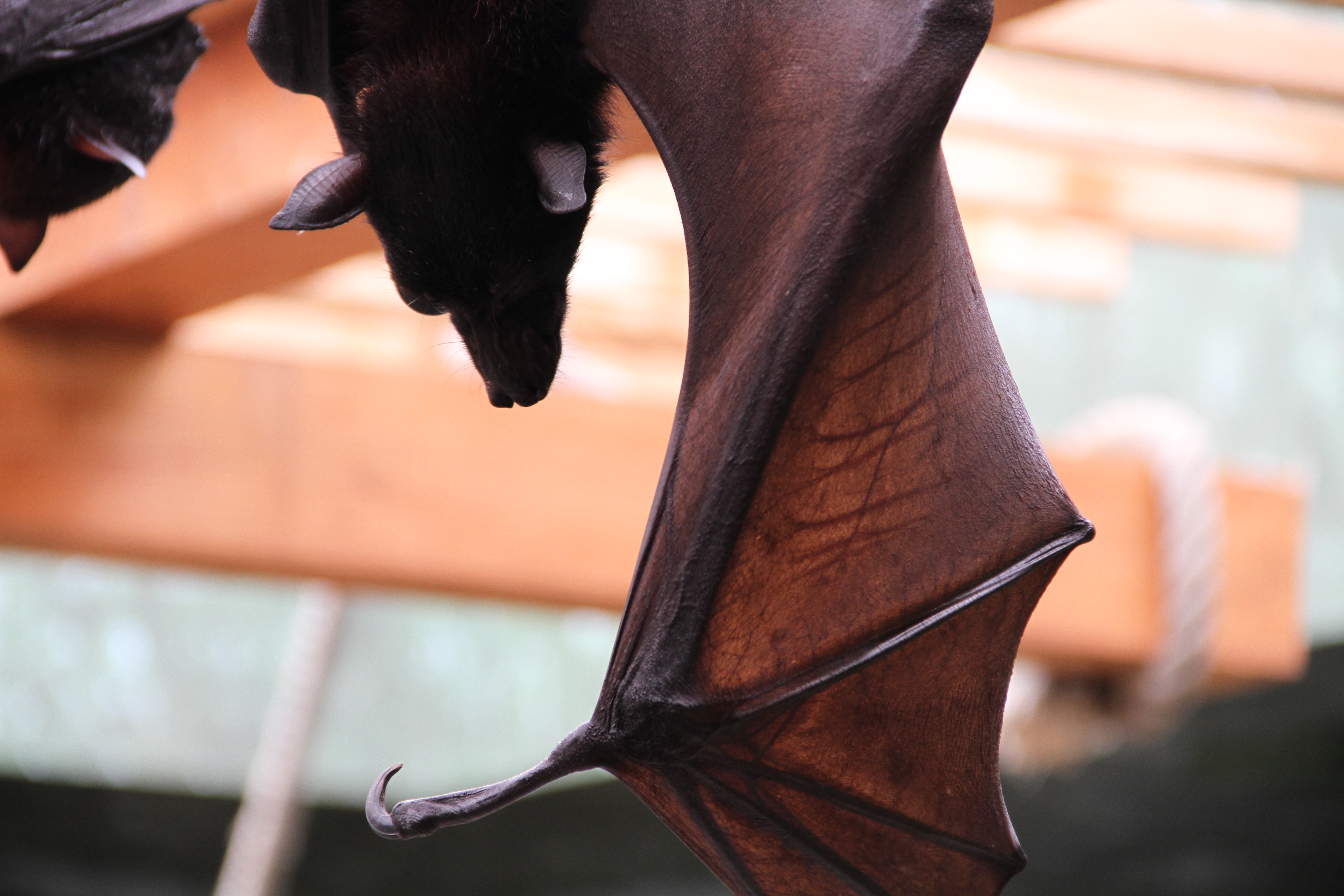
The roughly 200 species of megabats, the large fruit bats and flying foxes, have genuinely impressive vision, with eyes adapted for low-light conditions. Some can even see into the ultraviolet spectrum; a 2003 study in Nature by Winter, López, and von Helversen found that certain flower bats use UV-sensitive rod pigments, a mechanism previously unknown in mammals.
Microbats, the smaller, insect-hunting species most people picture when they think "bat", do lean heavily on echolocation, their biological sonar system. But echolocation doesn't replace vision; it complements it. Research published in Frontiers in Physiology (2015) showed that many microbat species actively use both sensory systems together, switching between them depending on light levels and what they're trying to do. A 2022 review in Current Biology confirmed the same: Egyptian fruit bats weight vision more heavily when deciding where to fly, while echolocation dominates when threading through tight obstacles.
The myth persists partly because bats are fast, erratic, and most active at dusk, when human vision is also unreliable. Observations of a bat threading through the dark have always looked like the navigation of a blind creature; the animal's actual perceptual toolkit was simply not accessible to casual observation. What the research has established is a system that adjusts continuously: in open sky, vision helps a bat track distant objects while echolocation handles close-range maneuvering; in enclosed spaces or total darkness, echolocation dominates. The idiom that has followed bats for centuries describes an animal that does not exist.