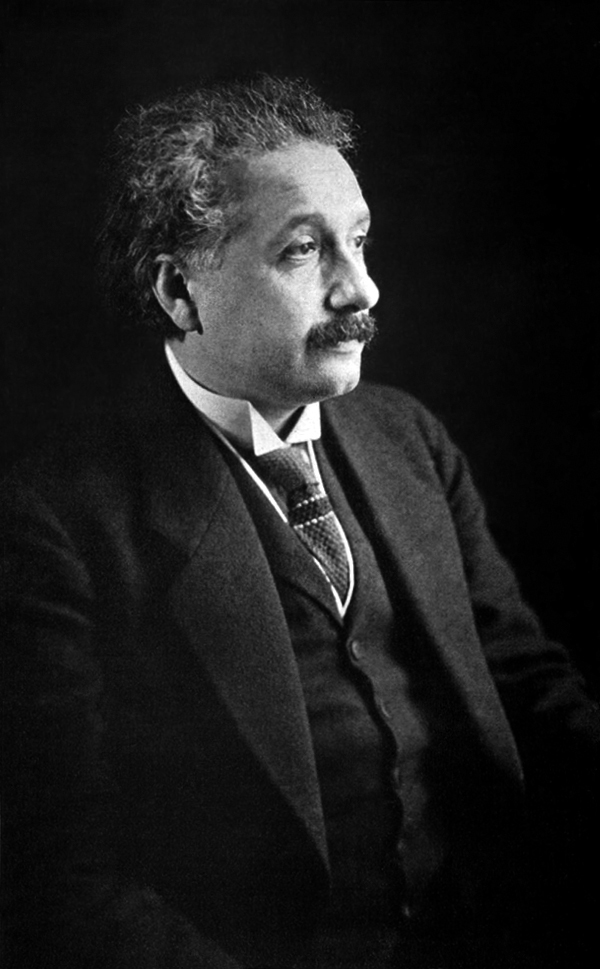
Albert Einstein failed math in school.
Einstein excelled in mathematics from an early age. He taught himself calculus by age 12 and was doing advanced math before most students. The myth conflates a change in grading systems.
What changed?
The story is told to struggling students as a comfort: even Einstein failed math. The reassurance has a good structure, if the greatest mind of the twentieth century stumbled in school, then poor grades mean nothing. Teachers deploy it generously. Motivational posters frame it in sans-serif fonts. It has the feel of a parable.
Einstein did not fail math. The record is clear and opposite. He was fascinated by mathematics from childhood, his uncle Jakob introduced him to algebra when he was about six, framing it as a hunt for the unknown. By twelve, he had taught himself algebra and Euclidean geometry over a single summer and was working through calculus. His gymnasium teachers in Aarau, Switzerland considered him exceptionally talented. His math scores in school were consistently high.
The myth likely originated in a confusion about grading systems. In the Swiss system used at the Cantonal School in Aarau, grades ran from 1 (best) to 6 (worst), the inverse of many other European systems. Einstein received a 6 in algebra, which in Switzerland meant excellence. When this was later reported without the context, readers who assumed the familiar convention interpreted a 6 as failure. A translation error became biographical legend.
Einstein did fail the entrance examination to the ETH Zurich polytechnic on his first attempt in 1895, at the age of fifteen, when he was two years younger than the typical applicant. His scores in French and botany were inadequate, though his physics and mathematics results were described as exceptional. He attended a preparatory school for a year and was admitted the following year without difficulty.
The failure narrative persists because it is useful. It flatters the student who is struggling and implies that institutional measures of ability are unreliable guides to genuine potential, which is often true, but not because Einstein's math was poor. The real story, a child so far ahead of his peers that he was bored and sometimes careless, is less comforting but more accurate.