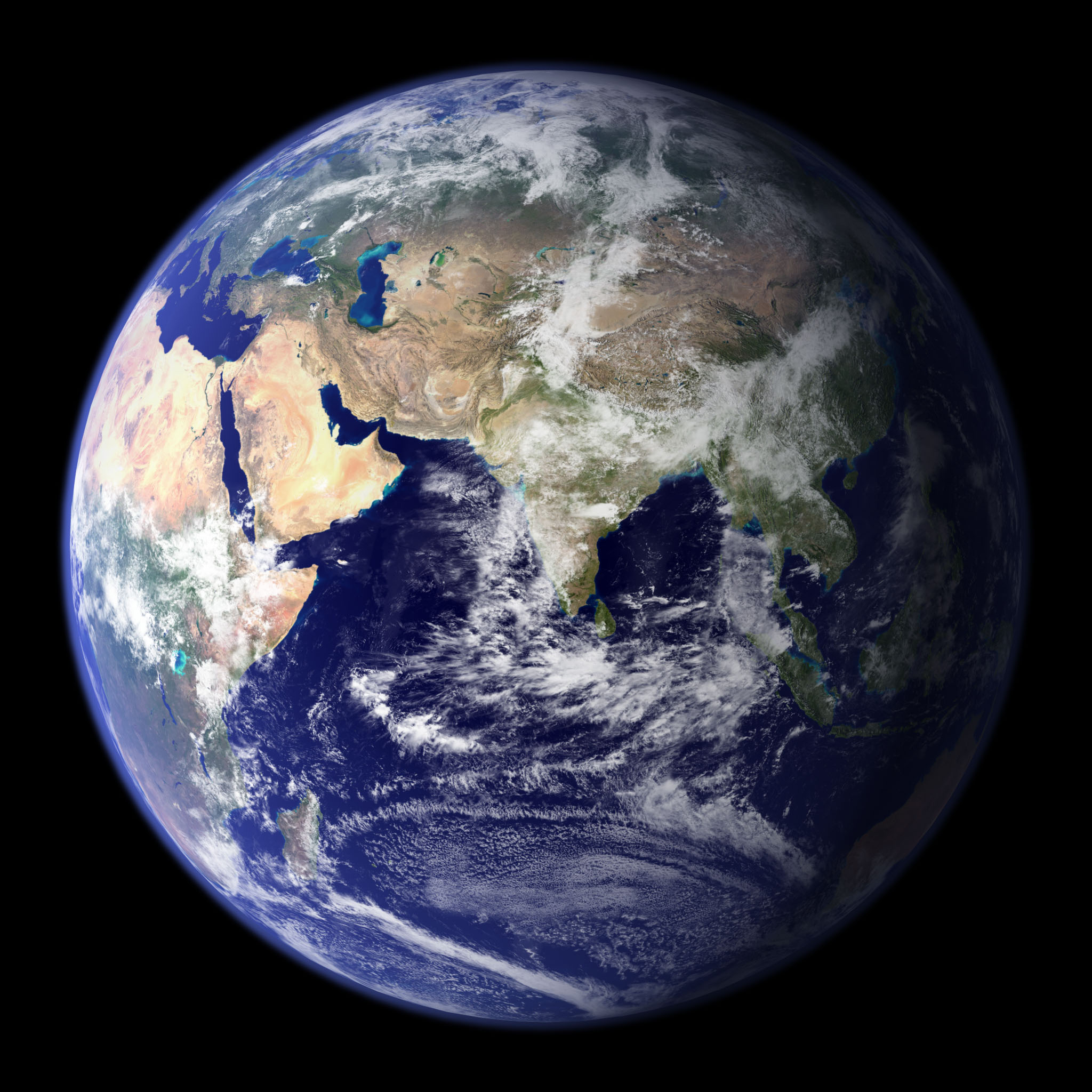
The Great Wall of China is the only human-made object visible from space (or from the Moon).
The Great Wall is very difficult to see with the naked eye from low Earth orbit and is not visible from the Moon. Many structures (cities, highways, airports) are more visible.
What changed?
The claim has floated through trivia books, textbooks, and dinner-table conversations for nearly a century: the Great Wall of China is so vast that it can be seen from space, some versions say even from the Moon. It sounds like the kind of fact that must be true. The Wall is, after all, thousands of kilometres long, an engineering achievement visible on any map of China. Surely something that large must be detectable from orbit.
The physics disagrees, and it takes only a few minutes of arithmetic to see why.
The Great Wall averages 5 to 9 metres wide. From low Earth orbit, the altitude of the International Space Station, roughly 400 kilometres up, that width subtends an angle of about 0.00001 degrees. The unaided human eye can resolve roughly 0.02 degrees under ideal conditions: the Wall is approximately 1,000 times too narrow to distinguish. A human hair held at arm's length is a more plausible target. The Wall is long, but length alone does not make something visible from orbit; you need apparent width, and the Great Wall has almost none relative to the viewing distance. Wider structures such as motorways, airport runways, and reservoirs are far more plausible candidates.
The myth traces to 1932, when Robert Ripley, of Believe It or Not fame, included the claim in one of his syndicated newspaper cartoons. It spread into reference books and, eventually, into classroom materials. Neil Armstrong was specifically asked after returning from the Moon in 1969 whether he had seen the Wall; he said he could not identify it. In October 2003, Yang Liwei became the first Chinese citizen to reach space, and looked for the Wall as a matter of national pride. He could not see it, an awkward outcome given how thoroughly the claim had been woven into Chinese school curricula.
A NASA astronaut did photograph what appeared to be the Wall from the ISS in 2004, but subsequent analysis identified the feature as a river and an associated canal in Inner Mongolia. What is clearly visible from orbit? Cities and their suburban sprawl. Major highways and airport runways when conditions are right. The green-brown patchwork of agricultural land. On the night side of Earth, the electric lattice of lit urban centres maps human civilisation in striking detail. Human presence is very visible from space, just not in the form that makes for a satisfying trivia answer.