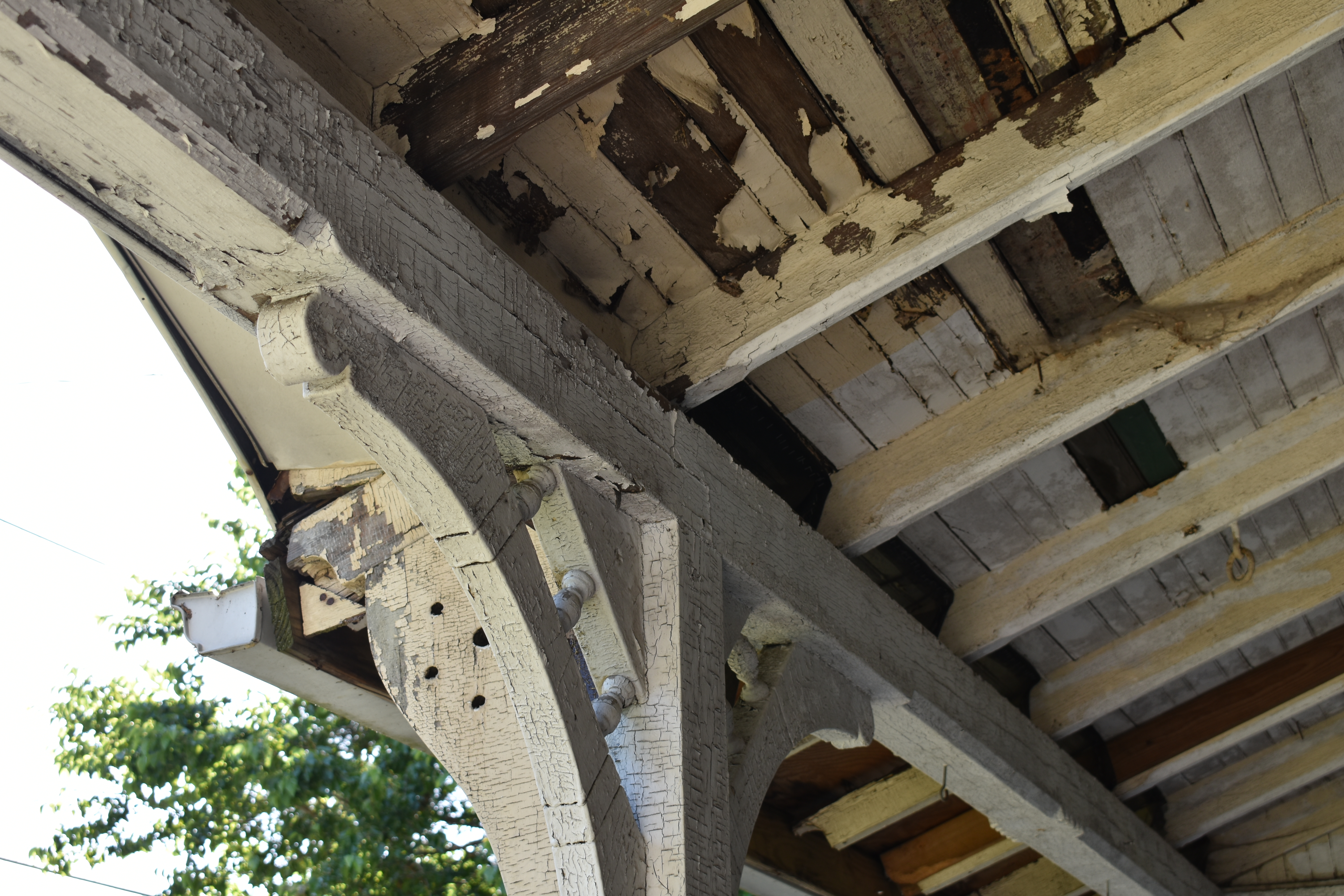
Lead paint on walls is safe as long as it is not peeling or chipping.
Lead paint poses risks even when not visibly deteriorating - dust from normal wear, opening windows, and renovations releases lead particles. The Consumer Product Safety Commission banned lead paint in US residential settings in 1978.
What changed?
The distinction sounded reasonable: lead paint was dangerous when it peeled, chipped, or crumbled, producing visible flakes that children might ingest. Paint that remained intact on the wall, smooth and unmarked, was another matter. This was the position that shaped public health guidance in the United States through much of the 1960s and 1970s, and it was wrong in ways that took a generation of pediatric research to fully document.
Lead had been added to paint for centuries,it improved drying time, increased durability, and produced a bright, washable surface that householders valued. By the early twentieth century, lead carbonate and lead oxide were standard ingredients in most interior and exterior paints sold in the United States. The industry knew by the 1920s that children were being poisoned by lead paint: internal documents produced decades later in litigation contained discussions of childhood poisoning from that era. The public response was to focus on obvious hazards,flaking and peeling paint in deteriorated housing,while implicitly endorsing the safety of intact paint.
What that framework missed was friction. Doors rubbing against frames, windows sliding in their channels, children's hands moving along baseboards,all of these routine contacts generated fine lead dust that became airborne, settled on floors and windowsills, and was then ingested through hand-to-mouth contact. The critical pathway for lead exposure in many homes was not a child chewing on a paint chip but ordinary household use generating invisible contamination. A child playing on the floor of a room with intact lead paint on its woodwork was receiving continuous low-level exposure. It did not look like poisoning.
Clair Patterson, a geochemist at the California Institute of Technology, had spent the 1950s measuring lead concentrations in polar ice and ocean sediments and discovered that twentieth-century Americans carried one hundred times more lead in their blood than preindustrial populations. His 1965 paper in the Archives of Environmental Health argued that what medicine had taken as a normal baseline for blood lead was itself a product of industrial contamination,from gasoline, from paint, from solder in food cans,and that no level of lead exposure was biologically neutral. Patterson's findings were methodologically impeccable and politically unwelcome; the lead industry spent years attempting to discredit him.
Herbert Needleman, a pediatrician at Harvard Medical School, took a different approach. Working in the Boston area in the early 1970s, he collected deciduous teeth from first and second graders in two Massachusetts communities and measured the lead content in the dentine, which retained a record of childhood exposure. His 1979 paper in the New England Journal of Medicine compared the psychometric test results of children with high versus low dentine lead levels and found significant deficits in IQ, attention, and verbal processing in the high-lead group,children who had never displayed symptoms of clinical lead poisoning, who had not ingested paint chips, who simply lived in older homes.
The Consumer Product Safety Commission had already moved. In October 1978, a year before Needleman's paper appeared, the CPSC banned lead-based paint for residential use and toys, setting a threshold of 0.06 percent lead by dry weight. The ban addressed new construction and products; it could not retroactively strip the lead from the tens of millions of homes painted before the regulation took effect. Houses built before 1978,which, by the agency's estimate, accounted for roughly sixty-eight million American homes,remained a source of exposure for decades, particularly when renovation work disturbed intact painted surfaces and released lead dust in quantities far exceeding anything produced by ordinary wear.
The notion that stable, intact lead paint posed no threat had functioned as a comfortable boundary between manageable and unmanageable risk. The research that accumulated through the 1970s and 1980s erased that boundary.