Mathematics is a complete formal system: any true mathematical statement can eventually be proved.
Gödel's 1931 incompleteness theorems proved this impossible. Any consistent formal system powerful enough to express basic arithmetic contains true statements that cannot be proved within that system. No set of axioms can be simultaneously complete and consistent.
What changed?
David Hilbert's address to the International Congress of Mathematicians in Paris in 1900 opened with a conviction that mathematicians found encouraging rather than provocative: every mathematical problem has a solution. Hilbert told the audience that if the answer is not found today, it can be found tomorrow. Over the following three decades, he developed this optimism into a formal program, now called Hilbert's program: place all mathematics on an unambiguous axiomatic foundation and demonstrate that the system was complete, meaning that any true mathematical statement was, in principle, provable within it.
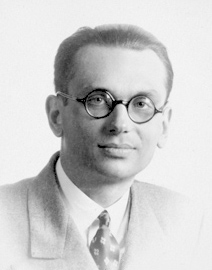
Kurt Gödel, then twenty-five years old and a member of the Vienna Circle of philosophers, submitted a paper to the Monatshefte für Mathematik und Physik in 1931 titled "On Formally Undecidable Propositions of Principia Mathematica and Related Systems." Principia Mathematica was Bertrand Russell and Alfred North Whitehead's attempt to derive all of mathematics from pure logical foundations, and Hilbert had regarded it as a candidate for the complete, consistent system he sought. Gödel's paper showed it could not be what Hilbert wanted, and neither could any sufficiently powerful system like it.
The proof constructed a specific arithmetical statement that, read at the level of the system's own structure, asserted its own unprovability within that system. If the system is consistent and the statement is false, the system can prove it, which means the system has proved something false, contradicting its consistency. If the statement is true, it genuinely cannot be proved within the system, and the system contains a true statement it cannot capture. A consistent formal system of sufficient expressive power is necessarily incomplete; adding more axioms does not close the gap, because the expanded system faces the same limitation.
The construction required Gödel to encode the entire syntax of a formal system into arithmetic by assigning unique integers to symbols, formulas, and proofs. This Gödel numbering allowed statements about provability to be expressed as numerical relationships, and the self-referential argument to be stated within the very language it was describing.
John von Neumann attended Gödel's presentation at the Königsberg conference in September 1930 and understood the implications before most of the audience did. He sent Gödel a letter noting that the results also implied the unprovability of consistency, a corollary Gödel had not yet published. Gödel's second incompleteness theorem, stated in the 1931 paper, confirmed this: no consistent formal system of sufficient power can prove its own consistency from within. Hilbert, who had built a career on the assumption that such a foundation was achievable, reportedly received the news with profound disturbance.
Alan Turing's 1936 paper on computable numbers drew directly on Gödel's results to show that no algorithm could determine, for an arbitrary program, whether it would eventually halt. The connection was structural: Turing reformulated the diagonal construction in computational terms, producing the theoretical foundation of computer science before electronic computers existed in any practical form. The halting problem and Gödel's unprovable statements were different expressions of the same underlying limit on what formal systems can determine about themselves.
School curricula presented mathematics as a discipline in which proof, applied with sufficient effort, could settle any well-posed question. The incompleteness theorems were known among research mathematicians from 1931 onward, but the content rarely entered secondary education. Students learning Euclidean geometry encountered proof as a mechanism that yielded certainty without inherent limit. The formal result that some true statements lie outside the reach of proof within any given system was classified as graduate-level logic and excluded from the curricula in which most students first encountered the idea of mathematical proof.