Eyewitness testimony is highly reliable evidence of events.
Eyewitness memory is highly malleable. Post-event information, stress, and question framing all distort memory. Courts are gradually reforming eyewitness evidence standards.
What changed?
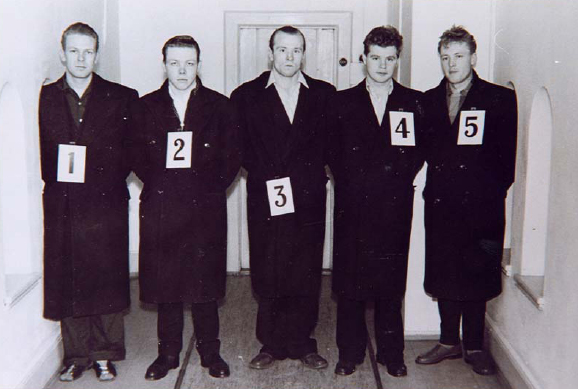
In the summer of 1984, Jennifer Thompson was raped at knifepoint in her Burlington, North Carolina apartment. She was determined to memorize her attacker's face. She studied it throughout the assault, she later said, with the deliberate intention of surviving and helping police catch the man who had done this. When shown a photo lineup the next day, she picked Ronald Cotton. She was certain. At trial, she testified with absolute conviction. Cotton was convicted and sentenced to life in prison.
He served eleven years.
In 1995, DNA evidence exonerated Cotton and identified the actual perpetrator, a man named Bobby Poole, who had been presented to Thompson in a subsequent lineup but whom she had not recognized. Thompson's identification had not been a guess or an approximation, it had been a confident, detailed, sincere recollection. She had studied the face. She had been certain. And she had been wrong.
The case became one of the most cited examples in a larger reckoning that was decades in the making. Research demonstrating the unreliability of eyewitness identification had been accumulating since the early 1970s, primarily through the work of Elizabeth Loftus, but the research and the courtroom existed in largely separate worlds for most of that period.
In 1974, Loftus and John Palmer published their car crash experiment, demonstrating that a single verb in a question, "smashed" versus "hit", could alter not only what subjects reported seeing but what they believed they had seen, including details not present in the original footage. The study directly modeled eyewitness conditions: subjects observed an event, were asked leading questions that introduced false information, and then recalled. Their contaminated memories were indistinguishable from uncontaminated ones in terms of the witnesses' own confidence.
Loftus began appearing as an expert witness in criminal cases, explaining the misinformation effect to juries. The reception was often hostile. In 1979, the U.S. Supreme Court's ruling in Manson v. Brathwaite declined to impose reliability standards on eyewitness identifications, holding that juries were capable of assessing eyewitness credibility on their own. The ruling assumed jurors could detect unreliable testimony, but the research was showing that unreliable testimony and reliable testimony were experientially indistinguishable.
Studies on the factors affecting eyewitness accuracy accumulated through the 1980s and 1990s: cross-racial identification was less accurate; high stress impaired identification despite intuitive assumptions to the contrary; the presence of a weapon drew attention away from faces; and the confidence witnesses expressed when identifying suspects was not reliably correlated with accuracy. A 1999 report from the National Institute of Justice compiled these findings and recommended procedural reforms, double-blind lineup administration, sequential rather than simultaneous presentation of suspects, and standardized instructions telling witnesses the perpetrator might not be present.
The reforms came slowly. By 2009, when the Innocence Project had exonerated more than two hundred wrongfully convicted individuals through DNA evidence, approximately 75 percent of those cases involved eyewitness misidentification. The figure was not a finding about dishonest witnesses. It was a finding about the architecture of memory: sincere, certain, detailed, and wrong.