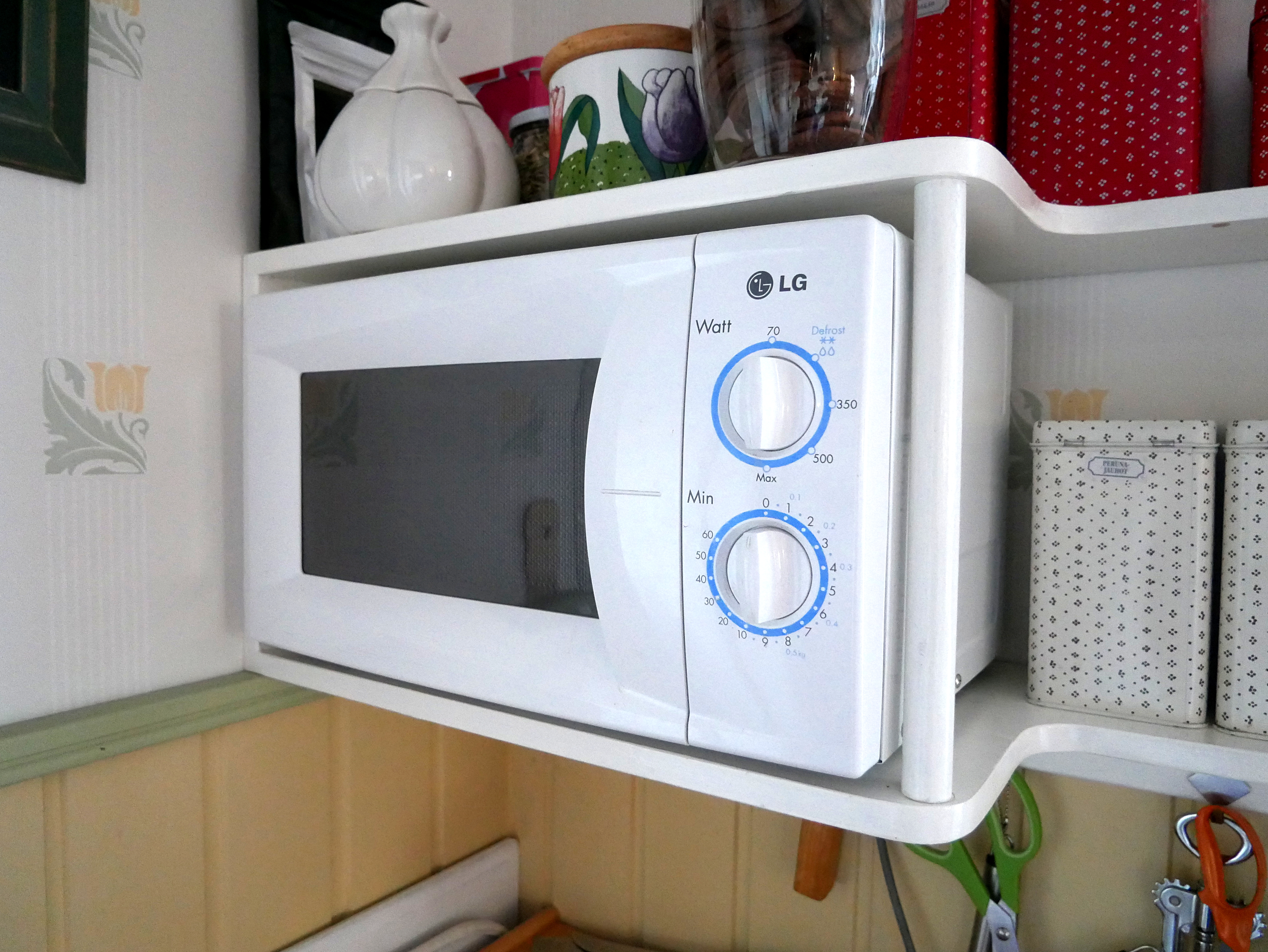
The warning entered household knowledge the way most safety rules do: through repetition, authority, and just enough danger to make caution feel wise. Put metal in a microwave and it will spark. Sparks mean fire. Fire means disaster. By the time microwave ovens became standard in American kitchens during the 1980s, the prohibition had calcified into something that felt less like advice and more like physics itself, an absolute law admitting no exception.
The actual physics, understood from the moment Percy Spencer accidentally melted a chocolate bar near a magnetron in 1945, tells a more conditional story. Microwaves heat food by causing water molecules to vibrate. Metal reflects those microwaves rather than absorbing them, which is why microwave interiors are metal-lined. Problems arise not from reflection but from geometry. Thin metal with sharp edges or points, crumpled aluminum foil, a twist-tie, a fork with splayed tines, can concentrate the electric field and create conditions for arcing, the visible spark that frightened a generation of cooks. A smooth metal spoon in a mug of water, a rounded stainless steel bowl, a carefully positioned metal rack designed for the oven, often emerge from a heating cycle entirely without incident. Shape matters more than category.
This distinction appeared in early technical documentation. Raytheon's first commercial microwave oven, the 1947 Radarange, stood nearly six feet tall, weighed 750 pounds, and came with detailed operation manuals that warned against certain configurations of metal rather than banning metal outright. But as microwaves shrank and prices dropped, as the appliances moved from commercial kitchens into suburban homes in the 1970s, consumer education simplified the message. Warning labels condensed nuance into categorical prohibition. Parents taught children the simple rule. The exception disappeared, and the edge case became universal law.
The oversimplification was not irrational. A stainless steel spoon might be safe, but a piece of aluminum foil might not, and the average user had no reason to learn the physics of field concentration or arcing thresholds. Glass and ceramic avoided the question entirely. No one suffered harm from excessive caution. But the cost of the simplification was a generation that believed a forgotten utensil would trigger an explosion, that treated a safety guideline as if it were a fundamental property of matter.
Metal in microwaves became a staple of college dorm folklore, the subject of YouTube disaster videos, a shorthand for catastrophic ignorance. The reality was always more forgiving than the rule suggested. Microwave oven fires do occur, but they result most often from overheated food, not metal. The sparks that do appear from metal are usually brief, harmless, and stop when the offending object is removed. Yet the rule persisted, passed down with the confidence of settled fact.
The microwave oven, born from wartime radar technology, was never as dangerous as its reputation implied, and never as simple as the warning label suggested. The truth required reading past the bold type, understanding that "never put metal in a microwave" meant "avoid certain shapes of metal under certain conditions," which is harder to fit on a sticker. Safety rules compress complexity into maxims. Sometimes the maxim becomes the only thing anyone remembers.