Space is completely empty between planets and stars.
Space contains plasma, gas, dust, cosmic rays, magnetic fields, and electromagnetic radiation. Luna 1 (1959) directly measured the solar wind - a continuous stream of charged particles from the sun.
What changed?
The idea that space was simply "nothing", a perfect void between the planets, seemed like common sense. Stars were separated by vacuum, and vacuum meant empty: no air, no matter, no substance. Even physicists in the early 20th century, after abandoning the luminiferous aether, tended to treat interplanetary space as essentially featureless. School curricula through the 1950s reinforced the picture: space was a void through which planets and comets moved, with nothing in between.
Luna 1 ended that comfortably simple picture on January 2, 1959.
The Soviet spacecraft, the first human-made object to escape Earth’s gravity and enter heliocentric orbit, carried a magnetometer and ion traps designed to probe the environment near the Moon. It didn’t find much of a lunar magnetic field. But physicist Konstantin Gringauz, analysing the ion trap data, recorded something unexpected: a continuous stream of charged particles flowing outward from the Sun at hundreds of kilometres per second. The solar wind was real, and interplanetary space was full of it.
The solar wind, a constant outflow of electrons, protons, and heavier ions from the Sun’s corona, travels between 400 and 800 kilometres per second and extends to the edge of the heliosphere, roughly 100 astronomical units from the Sun. It is far from the only thing filling what we call “empty” space. The interplanetary medium also contains cosmic dust, magnetic field lines dragged from the Sun, energetic particles from across the galaxy, and, in denser regions, vast molecular clouds at temperatures barely above absolute zero.
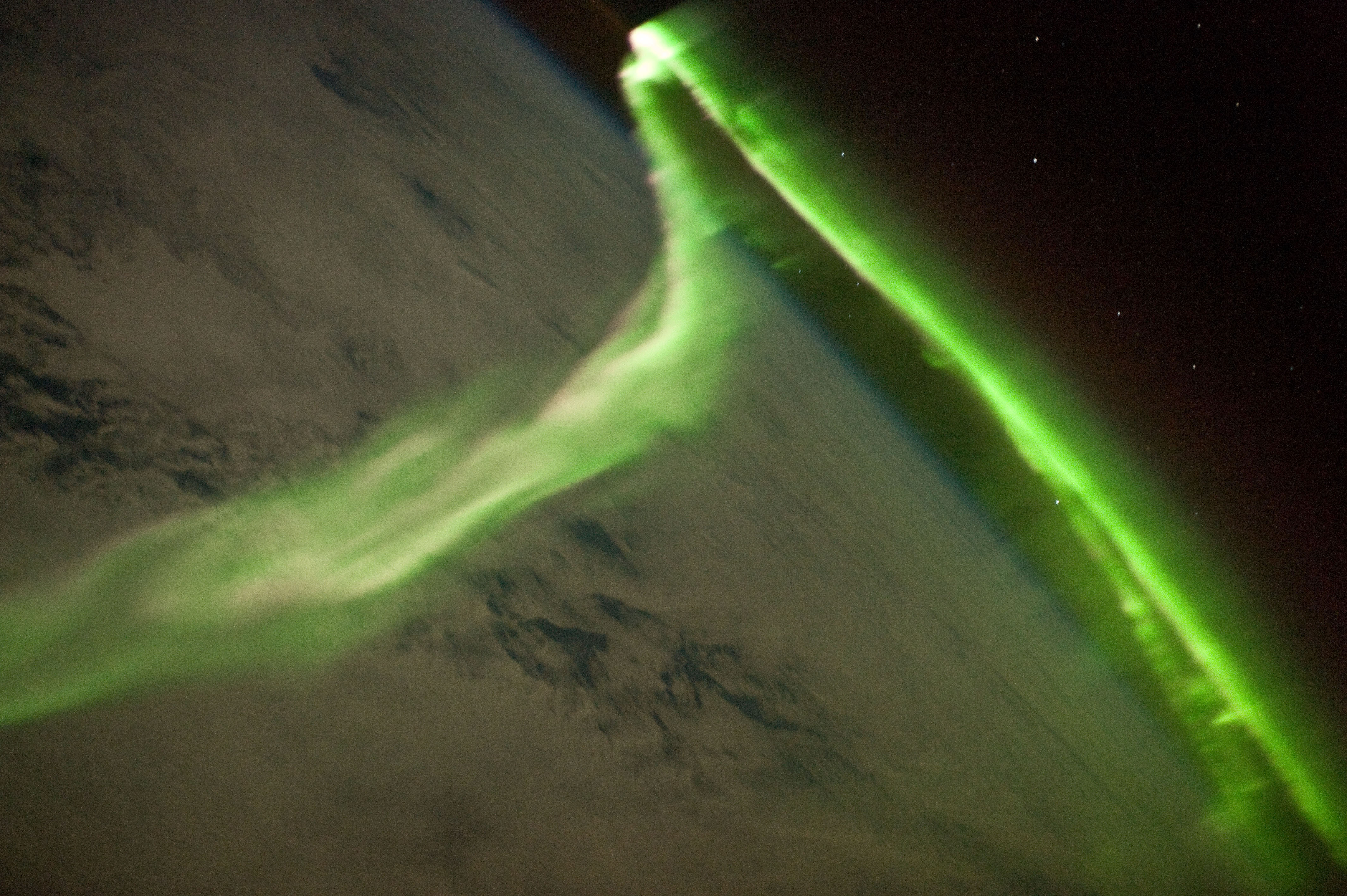
The practical consequences became clear in subsequent decades. The solar wind sculpts planetary magnetospheres, strips atmospheres from planets without magnetic protection (as it did to Mars), and drives the aurora borealis and aurora australis visible at Earth’s poles. Space had never been empty. It had simply been waiting for instruments sensitive enough to read it.