The universe has always existed in roughly its current form, with matter continuously created to fill expanding space (steady-state theory).
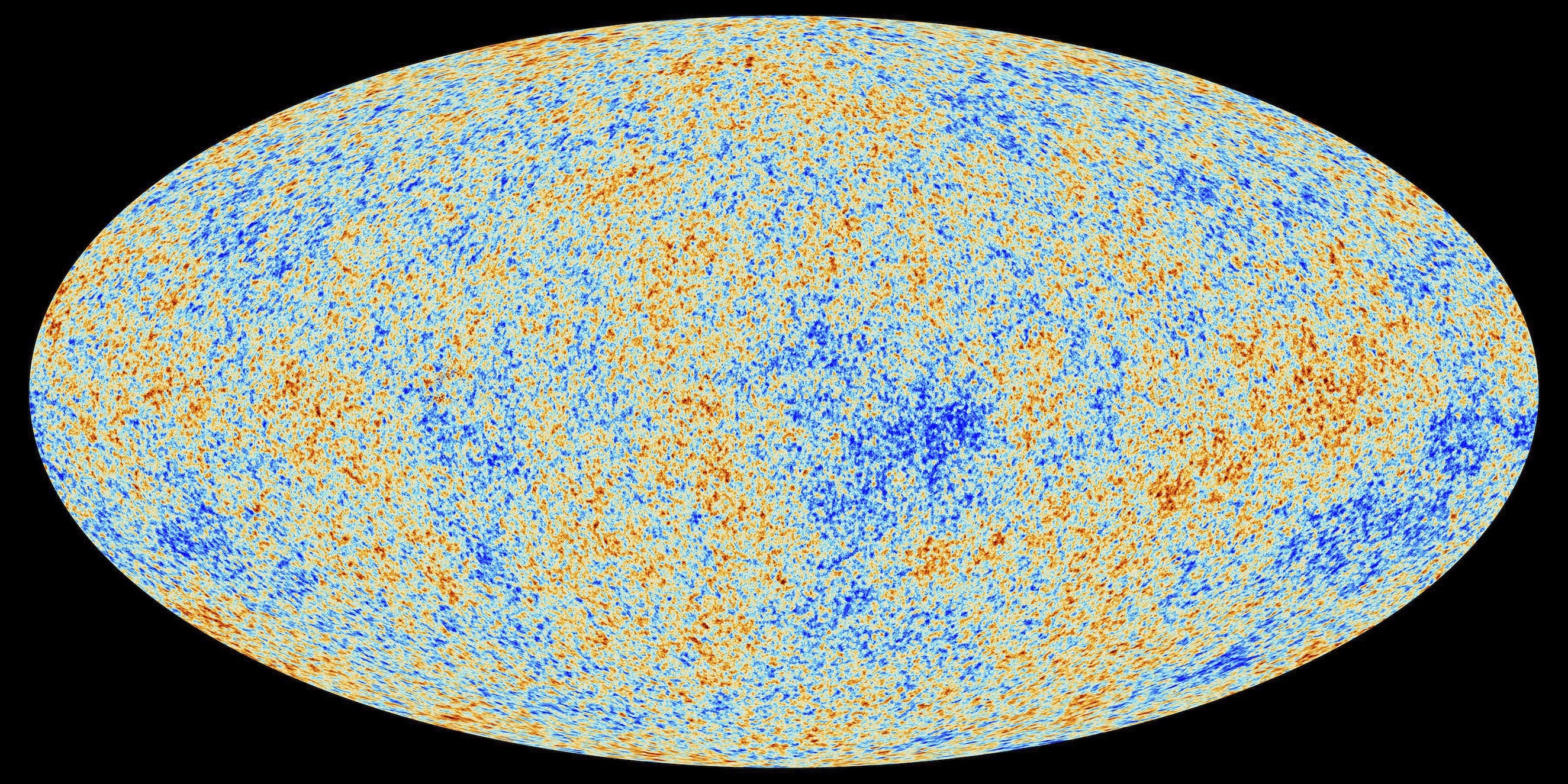
The universe began in a hot, dense state approximately 13.8 billion years ago (the Big Bang). The Cosmic Microwave Background, discovered in 1965, confirmed this. Fred Hoyle, who coined 'Big Bang' mockingly, never fully accepted the evidence.
What changed?
By the late 1940s, astronomers were arguing about the universe itself. Edwin Hubble had shown the galaxies were receding, space was expanding. But expanding from what? Two rival camps emerged. George Gamow and colleagues argued the universe had begun in an unimaginably hot, dense state. Fred Hoyle, Hermann Bondi, and Thomas Gold disagreed: the cosmos had no beginning. Space expanded, yes, but new matter was continuously created to fill the gaps, keeping overall density constant forever. The universe had always existed in roughly its present form. It always would.
Through the 1950s, the debate was genuine. The steady-state model was scientifically respectable, mathematically elegant, and philosophically appealing, it sidestepped the unsettling question of what came before the universe. Hoyle was a gifted communicator who made the theory accessible to general audiences, and some textbooks presented both models as live scientific options. The very phrase “Big Bang” was Hoyle’s coinage, intended as a dismissal, it stuck as the name.
Then, in 1964, two Bell Labs engineers pointed a microwave antenna at the sky and couldn’t get rid of a noise they didn’t expect.
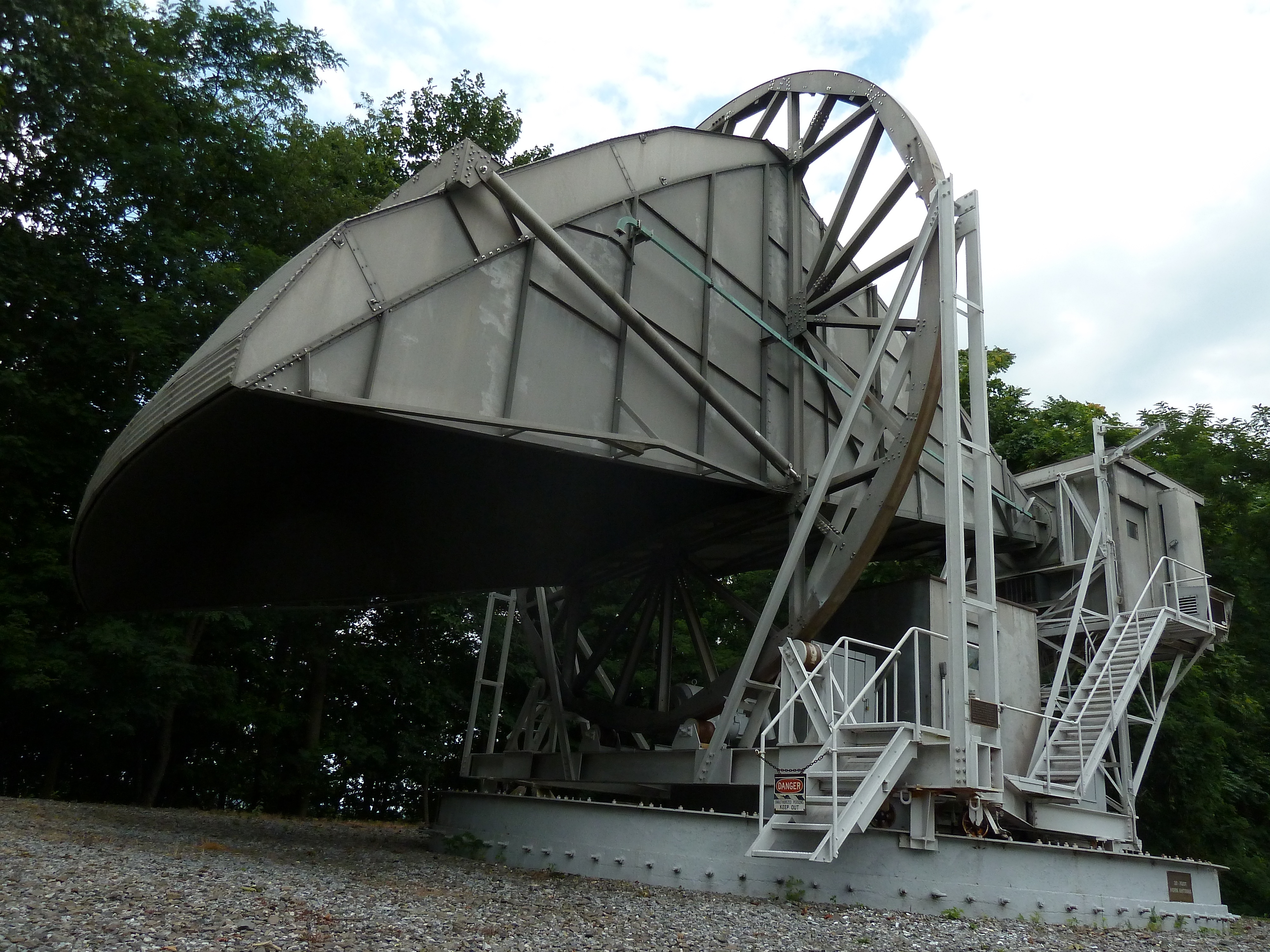
Arno Penzias and Robert Wilson were working with a sensitive horn antenna in Holmdel, New Jersey. They detected a faint, uniform microwave signal arriving equally from every direction in the sky, independent of the time of day or where the antenna pointed. They suspected interference, pigeons nesting in the antenna were, briefly, a genuine suspect, but cleaning the hardware changed nothing. When they learned that Princeton physicist Robert Dicke was independently predicting exactly such a signal as a relic of a primordial hot phase, the pieces clicked. What Penzias and Wilson had found was the Cosmic Microwave Background (CMB): the cooled afterglow of the Big Bang, now sitting at 2.7 degrees above absolute zero, filling the entire observable universe.
The steady-state model had no good explanation for the CMB. A universe with no beginning would have no reason to be uniformly bathed in thermal radiation from a single direction in time. Penzias and Wilson received the Nobel Prize in Physics in 1978. Hoyle, the model’s most eloquent defender, never fully accepted the verdict, spending subsequent decades proposing alternative interpretations of the CMB, thermalized starlight scattered by iron whiskers in space among them, each more strained than the last. Science had a beginning, it turned out. It just took 13.8 billion years to prove it.