There are three states of matter: solid, liquid, and gas.
There are at least four fundamental states (solid, liquid, gas, plasma), plus many others like Bose-Einstein condensates, superfluids, and more.
What changed?
For most of human history, matter came in three forms. Aristotle gave us the framework: earth (solid), water (liquid), and air (gas), three of his four classical elements. The fourth was fire, which he regarded as a different kind of thing entirely. It took until the 20th century to appreciate how right he was about that fourth one.
The solid-liquid-gas triad is genuinely useful. It accurately describes the phase transitions of water, ice, liquid, steam, and those of most everyday substances. Science education has reasonably used it as the entry point for understanding matter for generations. The problem is that "three" is a vast undercount.
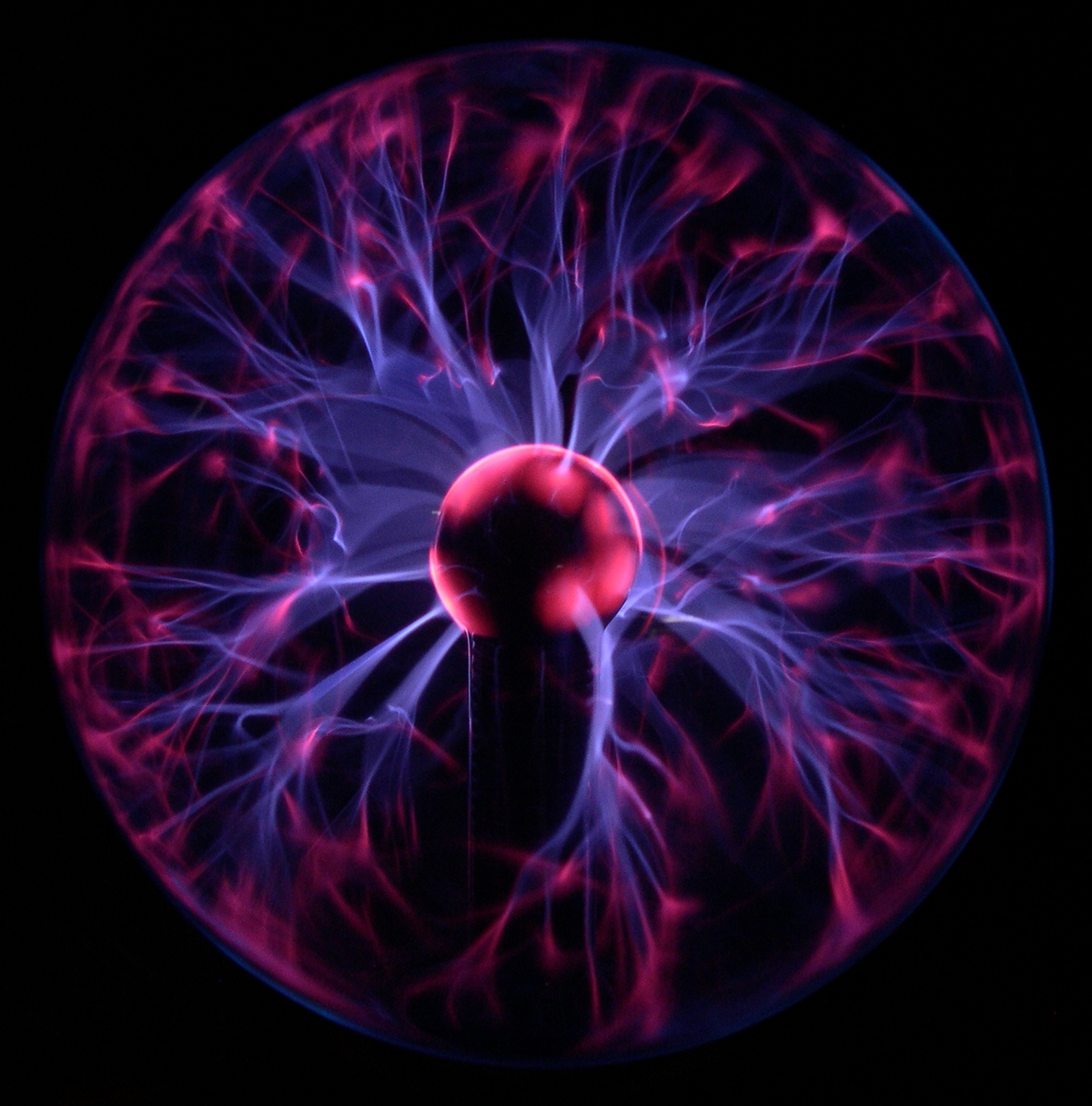
The first addition was plasma. Strip enough electrons from the atoms of a gas by heating it to extreme temperatures, and you get a fourth state of matter: a mixture of free electrons and positively charged ions that behaves very differently from a neutral gas. Plasma conducts electricity, responds dramatically to magnetic fields, and emits light. William Crookes described it in the 1870s, calling it "radiant matter." Irving Langmuir coined the term "plasma" in 1928. The discovery isn't obscure, by the time the space age began, plasma physics was a major scientific discipline, central to fusion research and astrophysics.
And yet it was missing from most elementary and secondary science curricula for decades after. Three states of matter remained standard in K-12 textbooks through the 1970s and beyond, even as plasma research consumed billions of dollars worldwide. The Sun is plasma. Every star is plasma. The solar wind that creates the Northern Lights is plasma. Plasma is, by most estimates, over 99 percent of all visible matter in the universe.
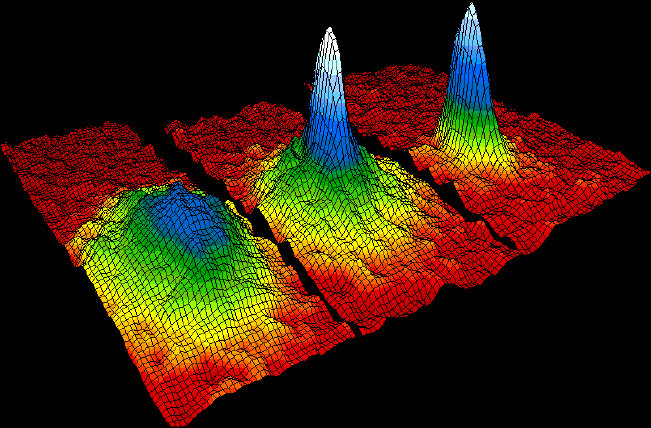
The second addition is the Bose-Einstein condensate. In 1924 and 1925, the Indian physicist Satyendra Nath Bose and Albert Einstein predicted that at temperatures near absolute zero, particles that follow a particular quantum statistical rule would lose their individual identities and collapse into a single quantum state, behaving as one coherent entity rather than a collection of separate particles. In 1995, Eric Cornell and Carl Wieman at JILA in Boulder, Colorado, achieved this state with a cloud of rubidium atoms cooled to 170 nanokelvin, about 170 billionths of a degree above absolute zero. They shared the 2001 Nobel Prize in Physics for the work.
The catalogue has continued to grow: fermionic condensates, superfluids, supersolids, time crystals, quark-gluon plasma. Each represents matter organized by principles absent from the solid-liquid-gas framework. Three states works well for ice, water, and steam. It fails completely to describe the Sun.