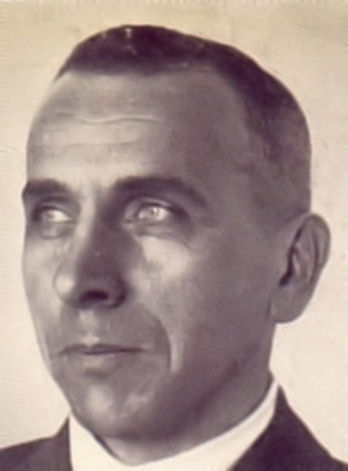
Alfred Wegener proposed continental drift but could not explain the mechanism. His theory was rejected until later evidence proved him right.
Wegener's continental drift was part of the broader theory of plate tectonics, which was established in the 1960s with seafloor spreading evidence. The mechanism is convection currents in the mantle.
What changed?
The story told in most textbooks is clean and satisfying: Alfred Wegener, a lone visionary, looked at a world map, noticed the continents fit together, and proposed they had once been joined. The scientific establishment rejected him for lacking a mechanism. He died on the Greenland ice sheet in 1930, unvindicated. Decades later, the seafloor was mapped, his theory was proved right, and geology finally caught up with the outsider it had scorned.
The story is substantially accurate. But the version that casts Wegener as a lone figure whose only failure was an absent mechanism, vindicated purely by posthumous evidence, flattens a more complicated and more interesting history.
Wegener was not entirely alone. In 1931, British geologist Arthur Holmes, one of the key figures in establishing the age of the Earth through radiometric dating, published a detailed proposal that convection currents in the Earth's hot, plastic mantle could be the engine for continental movement. Holmes's mechanism was not immediately accepted, but it was taken seriously and was part of the active scientific discussion well before the seafloor mapping era. The idea that Wegener left only a mystery was never quite right.
More fundamentally, the vindication of Wegener's core insight came through work he did not and could not have anticipated: systematic mapping of the ocean floor. Harry Hess's 1960 seafloor spreading hypothesis and Fred Vine and Drummond Matthews's 1963 confirmation using magnetic anomaly patterns were the actual empirical turning points. These did not simply 'prove Wegener right', they constructed a new synthesis, plate tectonics, that explained not only why continents had moved but how oceanic crust is created at mid-ocean ridges, destroyed at subduction zones, and why earthquakes and volcanoes concentrate where they do. It was a wholesale restructuring of Earth science.
The textbook narrative does Wegener real credit for a genuine insight, and the resistance he faced from contemporaries who could not accept drift without a mechanism was real and historically instructive. But it shortchanges Holmes, Hess, Vine, Matthews, and the oceanographers whose patient work built the case from the seafloor up. Science rarely vindicates lone geniuses. It usually works through accumulation: one person notices the pattern, another proposes the mechanism, a third finds the evidence that makes the mechanism unavoidable.