For most of the twentieth century, the Moon was treated as a solved problem. Telescopes had mapped its craters and maria in reasonable detail. Astronomers understood it was airless, waterless, and geologically inert. Textbooks described it as a dead rock, useful primarily for understanding orbital mechanics and tidal forces. The general scientific consensus, dominant from the 1930s through the 1960s, held that the Moon was essentially finished, a cold archive of ancient bombardment with nothing left to discover but finer measurements. Students learned that it was a curiosity, worth visiting perhaps for the achievement alone, but not a place where science would find anything fundamentally new.
That view rested on a reasonable foundation. Without an atmosphere to create weather, without liquid water to drive erosion, and without plate tectonics to recycle crust, the Moon appeared frozen in time. What could possibly be interesting about a world where nothing had happened for billions of years? The assumption seemed so obvious that few bothered to question it.
Apollo 8 changed the question entirely.
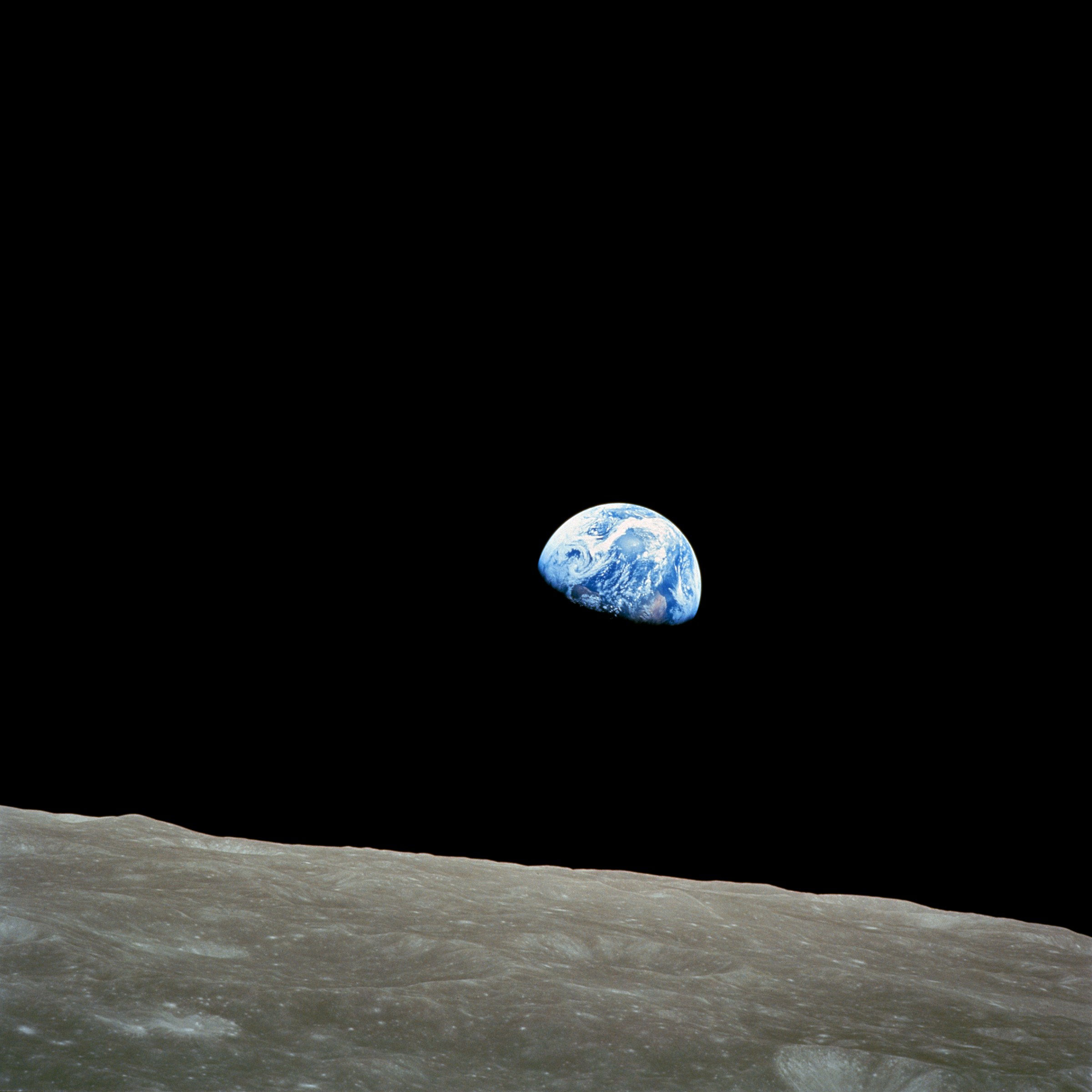
On December 21, 1968, three astronauts left Earth orbit and headed for the Moon. They entered lunar orbit three days later, becoming the first humans to see the far side of the Moon with their own eyes and to witness Earth from another world. On Christmas Eve, astronaut William Anders captured a photograph through the spacecraft window that became one of the defining images of the twentieth century. "Earthrise" showed Earth, small, vivid, impossibly blue, rising above the stark grey lunar horizon against the absolute blackness of space. The image reframed both worlds at once. Earth looked fragile and singular. The Moon, far from being merely a barren staging ground for flags and footprints, became a vantage point from which humanity could see itself entire.
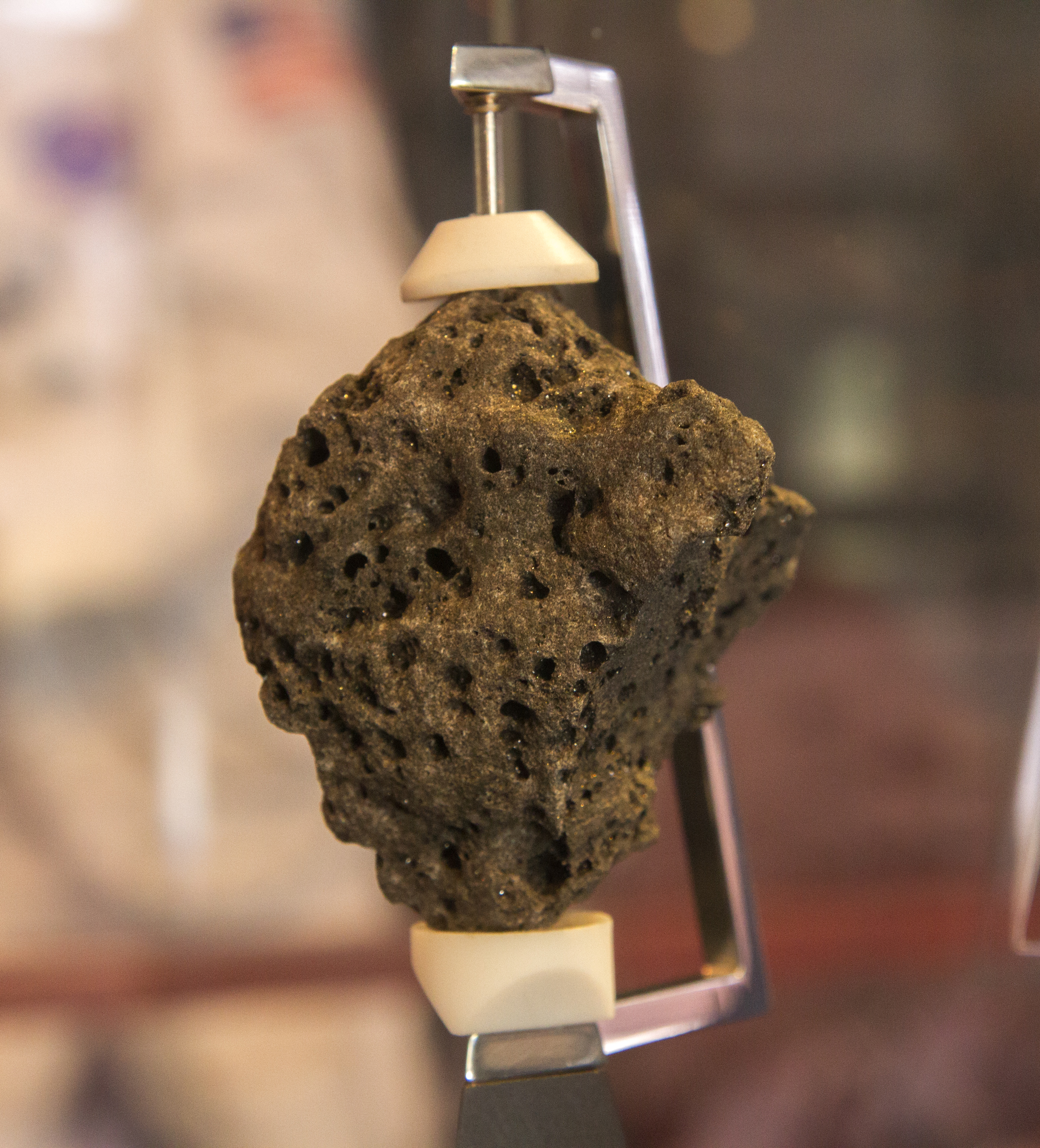
Then came the rocks, and with them, the real surprises.
Because the Moon has no plate tectonics, no weather, and virtually no ongoing geological activity, its surface preserves a record of conditions in the early solar system that Earth's own crust erased billions of years ago through recycling and erosion. When geologists began analysing the samples returned by Apollo 11 in 1969 and subsequent missions, they found isotopic signatures that didn't match any existing theory of lunar origin. The Moon's rocks were chemically similar to Earth's mantle, but depleted in volatile elements. The evidence pointed toward a catastrophic event: the Giant Impact Hypothesis emerged, proposing that the Moon formed from debris ejected when a Mars-sized protoplanet, now called Theia, collided with early Earth roughly 4.5 billion years ago. No other formation model could explain the isotopic match between lunar and terrestrial material. The Moon, it turned out, was a fragment of Earth itself, thrown into orbit by the most violent event in our planet's history.
Water arrived as the next correction. In the 1990s, radar observations from orbiting spacecraft hinted at anomalous reflections from permanently shadowed craters near the lunar poles. Scientists proposed that ice might persist there, deposited over billions of years by cometary impacts and preserved at temperatures that never rise above negative 170 degrees Celsius. The hypothesis seemed plausible but remained unproven until 2009, when the LCROSS mission deliberately crashed a spent rocket stage into Cabeus crater near the south pole. Instruments detected water vapour in the debris plume. Billions of tonnes of water ice, it turned out, had been sitting in lunar cold traps since the solar system was young.
The Moon also contains helium-3, a rare isotope deposited by the solar wind and absent on Earth because our magnetic field deflects it. Lunar regolith chemistry reveals details about solar activity over geological timescales. Crater densities provide a clock for dating surfaces across the inner solar system.
A barren, geologically dead rock with no scientific interest? The Moon became a 4.5-billion-year archive of planetary formation, a record of early solar bombardment, a potential source of water and fuel, and a natural laboratory for understanding how rocky worlds evolve. The assumption didn't survive contact with the evidence.