Disproven Facts
Technology

The Space Shuttle represents routine, reliable access to space. NASA has achieved a strong safety record.

Now we know:

Space Shuttle Challenger broke apart 73 seconds after launch on January 28, 1986, killing all seven crew members. The cause was an O-ring failure in cold weather - a known risk that engineers had warned about and management overrode.

Disproven 1986

What changed?

In January 1986, Christa McAuliffe was still weeks away from becoming the first teacher in space. NASA's Teacher in Space program had selected her from 11,000 applicants, and schools across the country had made plans to watch the launch live. The Space Shuttle was nine years into regular operation, with 24 successful missions. The agency had developed such confidence in the program's reliability that mission delays, there had been several for Challenger, were treated as minor operational inconveniences rather than signs of systemic risk.

Challenger launched on January 28, 1986, at 11:38 AM Eastern time. Temperatures at Kennedy Space Center had dropped to 18 degrees Fahrenheit the night before, the coldest launch conditions in the shuttle program's history. Roger Boisjoly and other engineers at Morton Thiokol, the manufacturer of the solid rocket boosters, had sent urgent warnings the previous evening. The O-rings that sealed joints in the boosters had shown a documented performance history correlated with cold temperatures; they had not been designed or tested for conditions below 53 degrees. Management overrode the objection. The launch proceeded.

Seventy-three seconds after liftoff, Challenger broke apart over the Atlantic Ocean. All seven crew members died. The Rogers Commission investigation found that the O-ring failure was the immediate cause, but that the deeper cause was a management culture at NASA that had normalized known risks. Engineers who raised concerns were required to prove the boosters were unsafe rather than to prove they were safe. The threshold had been inverted.

The accident happened while students across the country watched live in classrooms that had gathered specifically because of McAuliffe. The event was pedagogically devastating in ways beyond the loss of life: it demonstrated that institutional confidence could be structurally disconnected from engineering reality, and that the gap between what an organization says about its safety record and what its own engineers believe can be lethal.
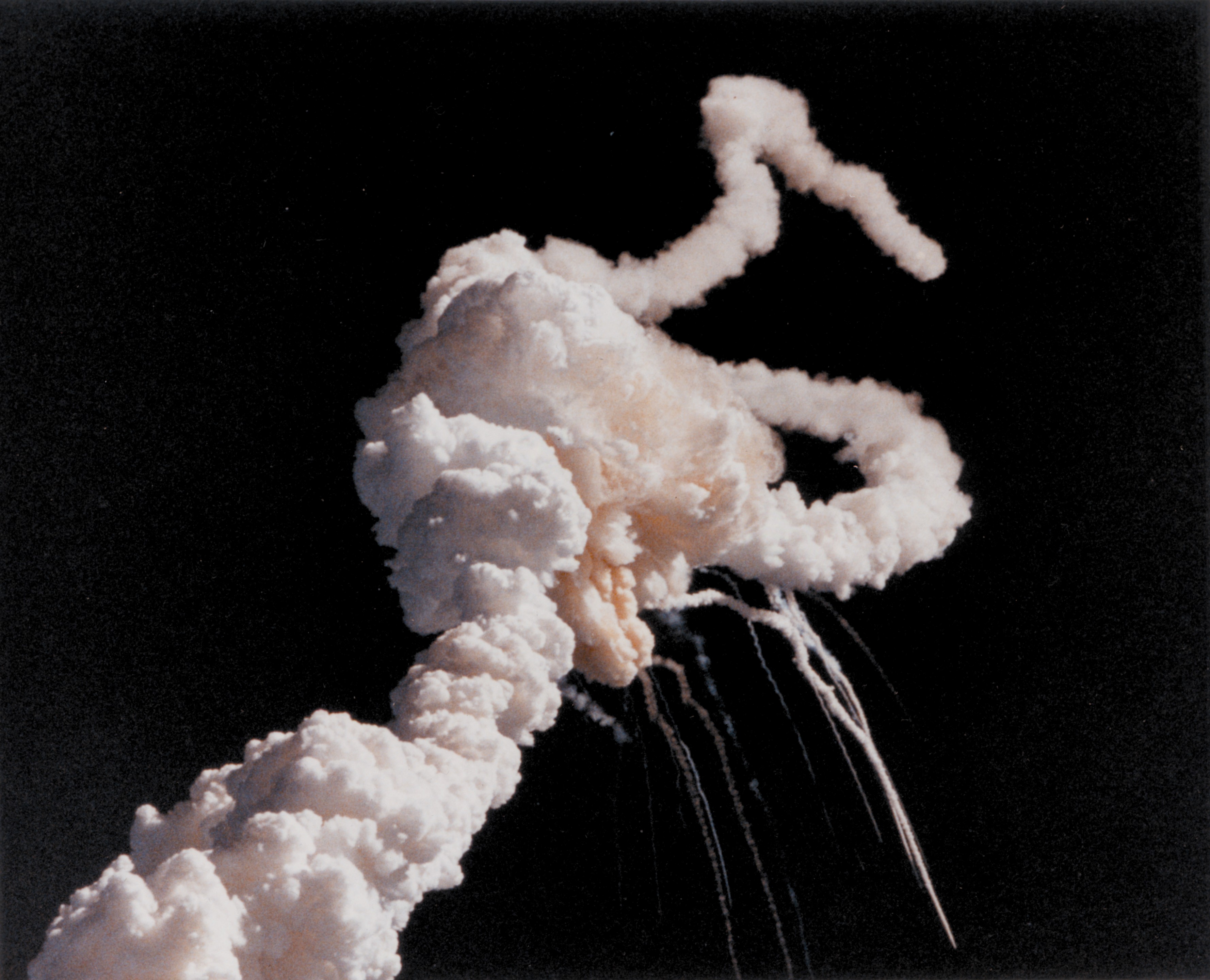
Photograph of the Space Shuttle Challenger breaking apart in a white cloud of smoke and debris against a clear blue sky shortly after launch.
Space Shuttle Challenger breaks apart 73 seconds after launch on January 28, 1986, killing all seven crew members. Millions of students watching live — many gathered specifically to see teacher Christa McAuliffe — witnessed the failure of the routine safety NASA had promoted for nine years of shuttle operations. · Kennedy Space Center (NASA) - Public Domain

At a glance

Disproven
1986
Believed since
1982
Duration
4 years
Taught in schools
1982 – 1986

Sources

  1. [1] Report of the Presidential Commission on the Space Shuttle Challenger Accident - Rogers Commission, 1986
  2. [2] The Challenger Launch Decision: Risky Technology, Culture, and Deviance at NASA - Vaughan, D., 1996

See also

Astronomy
You were taught:

Space travel to the Moon was primarily an engineering challenge; radiation in space was not a serious biological hazard for short missions.

Now we know:

The Van Allen radiation belts and solar particle events posed genuine radiation hazards. Apollo trajectories were specifically designed to minimize belt transit time, and NASA tracked radiation doses carefully. A major solar particle event during a lunar transit could have been fatal; astronauts were fortunate none occurred. Post-mission analyses showed some Apollo astronauts received doses approaching occupational safety limits.

Disproven1970
Read more →
Drugs & Toxins
You were taught:

The Chernobyl nuclear accident's health effects were limited to the immediate area. The Soviet response contained the contamination.

Now we know:

Chernobyl released contamination across Europe. WHO estimates up to 4,000 additional cancer deaths may result from radiation exposure. The full health and environmental impact has been debated for decades, with some estimates far higher.

Disproven1991
Read more →
Technology
You were taught:

Reagan's Strategic Defense Initiative (SDI) is a technically feasible missile defense system that could render nuclear weapons obsolete.

Now we know:

The American Physical Society's 1987 report concluded that SDI was at least a decade from even beginning meaningful tests. The technology Reagan described did not exist and no comprehensive missile defense system exists today.

Disproven1988
Read more →
History
You were taught:

Ducking under a desk or behind a wall during a nuclear attack will protect you from the blast.

Now we know:

A desk provides no meaningful protection against a nuclear detonation. The civil defense campaign offered a false sense of control over a threat no classroom shelter could realistically address.

Disproven1960
Read more →